Showing posts with label writing. Show all posts

Sunday, July 21, 2013

Pros and Cons of Outlining


Most writers fall into two categories: those who outline before writing and those who just write. In my case, I tend to utilize both methods. I like knowing ahead of time where I’m going and how I’m going to get there. However, I also enjoy the freedom of taking a detour if the original road contains too many speed bumps. No matter what method you personally prefer, there are pros and cons that every writer experiences during the writing process.

Let’s examine the pros and cons of outlining first.

1. It’s too restrictive. There are those who stick to the game plan and avoid the unbeaten path altogether. If that makes you feel comfortable, then by all means stick with it, but there’s a certain sense of being shackled to an original thought that could potentially stall the formation of a better idea.

2. There are no surprises. Surprises in writing are always fun for the reader, but when they happen to the writer, they aren’t necessarily good things. An outline eliminates any unwanted surprises such as a hole in your plot, the introduction of any unnecessary characters, or a storyline that’s choppy and doesn’t flow the way it should.

3. They keep you on task. Just like a ‘To Do’ list, an outline tells you where you need to go and what you need to do. It allows you to plan out what you’re writing that day and helps make your storyline flow more seamlessly.

4. Outlines ensure flow and help make for a more structurally sound plot. An outline is structure. When you know exactly what events are going to transpire and when they’re going to transpire it makes for a better constructed plot and less of a chance of cracks in your overall foundation.

Although more spontaneous, writing by the seat of your pants isn’t for everyone, but for those who do it, the following positive and negative aspects may be encountered:

1. Your creativity is allowed to shine through. Like a kid in a candy store, the possibilities are both endless and exciting when you write unrestricted and let your mind take you to places and people it wouldn’t have had you stuck with the original plan.

2. More writing is accomplished in less time. I know when I write by the seat of my pants, I feel freer and the words just come to me more naturally than when I try to restrict them to the content of an outline. Sometimes that’s a good thing, sometimes it’s more of a detriment, but I usually find that my word count for the day is higher and, for the most part, the content is solid when I write outline-free.

 
3 There’s more room for error. When you write without rules to go by, you’re more apt to break them. An outline lays out scene by scene instructions, ensuring a more fluid, relatively smoother writing experience without the standard errors that come without proper planning.

4. It can end up bogging you down. Even though you may write more when you let your mind take over, you may find that you end up doing a heck of a lot more editing. More words equal more filler and less meat to your story, subsequently leading to the trimming away of more fat.. You may find that this causes you to take more time with editing than you first anticipated, making this method of writing less productive in the long run.

At the end of the day, there really is no wrong way to write and no one manner of writing is better than the other. Different things work for different people. What matters is that it works for you and that you’re actually writing something as opposed to just staring at a blank sheet of paper.

Monday, July 4, 2011

A Day in the Life of an Aspiring Author

investigateproperty.com.au
Happy Independence Day to all my readers/followers from the USA!  It's been a rather exciting week for me (details coming in future blog posts if all goes well).  I hope you all had a safe, outstanding, and productive holiday weekend.

For this post I decided to deviate from my norm and go with a more tongue-in-cheek example of a typical day in the life of an aspiring author. Although, I'm using examples from my own life (albeit they aren't entirely literal examples as I'm not really writing about ninja robots, my daughter doesn't cause me to become that exasperated, I like my job more than I let on, and I don't swear like a sailor).  Still, I feel some of these little writerly quirks of mine may be relatable to some of you and I invite you to comment with typical days of your own (or blog about it if you want).


6:30 a.m.--Your rat bastard alarm clock goes off rousing you from your dreams of "the next big thing".  Sparkly vampires are out; ninja robots are the next big draw.  Annoyed, you hit the snooze button in the hopes of learning more about these butt-kicking androids so that you may commence work on the series that will launch your career. Hey, it worked for Stephenie Meyer, why can't it for you too?

6:40 a.m.--That damn alarm clock goes off again.  Thank God for snooze buttons.  Bring on the robot ninjas, you think as you fall back asleep to the smell of fresh ink drying on your epic publishing contract.

6:50 a.m.--Ten to seven! With only thirty minutes now to get yourself out the door, you curse that traitor of an alarm clock for allowing you to oversleep while promising yourself that you'll go to bed earlier and take a break from the WIP you've been working on since it magically popped into your head while driving (causing you to narrowly avoid hitting a lamp post).

7:10 a.m.--You hurriedly stumble around the house, nearly tripping over a stack of notes and research materials you've been referencing to ensure your work is historically accurate.  Promising yourself that you'll buy a folder to organize your notes more thoroughly, you make your way to your daughter's room to ready her for preschool.  While getting her dressed, you contemplate a major revision in the plot you put together for your ninja robot saga which you think is sorely needed and inadvertently put her shirt on backwards.  Assuring her it's good to go against the grain every once in a while, you go back to mentally envisioning your new plot twist and how to make it gel with the rest of your novel and whether you should put your old WIP on the back burner.

7:30 a.m.--Finally, you're on your way to your day job with barely enough time to spare.  Had you had the luxury of being a full-time writer, you'd already be at work right now.  Promising yourself that this time next year things will be different and you'll have that all-important book deal inked, you begrudgingly pull into the parking lot to start a new day.

8:00 a.m.-12:00 p.m.--Between taking calls from clients, dealing with office drama (a/k/a awesome writing material), and meeting deadlines, you find your desk papered with post-it notes depicting strokes of genius in dialogue, quotes, writing resources, agents' names and addresses, ideas for future projects and the last shreds of your dignity. With as much typing/handwriting that you've done today, you can't help but think that this whole writing thing better pan out before you're diagnosed with carpal tunnel and are forced to strike keys with a straw in your mouth.


12:00 p.m.-1:00 p.m.--Lunch.  The one solace available to you during the day.  Thankfully, you've brought your laptop and can retreat into your writing.  Too bad your coworkers don't feel the same way.  Instead of making headway, you find yourself bombarded with questions:  "What's your story about?"  "Why robot ninjas?"  "How did you come up with that idea?" "When can we buy your book?"  "When you sell it, are you going to quit your job and buy a mansion?"  Answering politely, but secretly thinking to yourself, shoot me now, you finish lunch with your word count two words higher from before lunch began.

1:00 p.m.-5:00 p.m.--Rewarding yourself for being ahead of schedule, you take a "mental health" break from work and surf the web.  After checking out the blogs of other writers and excerpts from their work, you get a pit in your stomach.  When comparing your work to theirs you realize that you have a much longer way to go than you think. Your mood switches from one of utter confidence to one of utter despair and then to one nothing short of pure annoyance as your coworker comes into your office to chitchat about the cute thing her cat did last night.

5:30 p.m.- 9:00 p.m.--You're home; time for writing...After your make dinner, do a load of laundry, give your kid a bath, feed your flatulent dog, spend quality time with your family, shower, iron your work clothes, clean up after dinner, take a call from your mother, explain to your husband why you won't hit it big by next week, fold and put away the laundry, get some exercise in to get rid of that roll you mysteriously acquired over the last month, and feed every living animal in the house including Gary, the snail, who you believe croaked about two weeks ago but don't have the heart to tell our daughter.

9:01 p.m.:  With the kid in bed and the husband passed out, it's go time.  Let's get it on!


9:10 p.m.--You hear your daughter's bedroom door squeak open.  Here we go again, you think to yourself .  Your daughter's footsteps draw nearer as she saunters into the living room and states that she can't go to bed without a glass of water.  Putting your laptop down, you oblige hoping that the water will somehow keep her confined in her room, but knowing that you're not that lucky.

9:25 p.m.--Just as you're in the throes of a ninja robot/werewolf android battle scene that hit you on your way home, you hear the familiar squeak and prepare yourself for the next set of demands from the munchkin.  As it turns out, she spilled her water all over herself...and her sheets.  Starring longingly at your screen, you force yourself up from your laptop with visions of werewolf android disembowelment dancing through your head.

9:34 p.m.--The sheets have been changed and your mini me is now tucked away in a dry bed.  While changing her sheets an epiphany struck you:  Werewolf androids are so 2010.  Your new antagonist will be of a zombie variety.  Thump, thump, thump.  Here she comes again.  Since she ended up wearing most of the first glass of water you got for her, another one is requested.  Rummaging through your cabinet, you find a sippy cup and consider it a foolproof plan.  Back to the zombies.

9:47 p.m.--"What now?" you bellow to yourself.  "Mommy, look what I can do," your daughter proclaims a la Stuart from MADtv.  You begin to wonder if Adam Mansbach was secretly spying on you for his inspiration when he wrote his brilliant bedtime story Go The F*ck To Sleep.

9:48 p.m.-10:30 p.m.--All is quiet on the Western front. Now that you finally have time to yourself, you return to your harrowing battle scene that--in your humble opinion--makes those in the Matrix look like nothing more than slap fights.  About a half-hour into it, you're noticing that you're making good pace and begin referring to yourself as the Carl Lewis of typing.  Of course, just as you start to get cocky, you find yourself smashing into a brick wall.  For the next twelve minutes, you find yourself starring into space contemplating whether or not certain words you just typed are even real words.  Really, what the hell kind of word is obligingly?

10:31 p.m.--After a quick Google search and dictionary entry, you find out that obligingly is in fact a word and you're not losing it after all.

10:32 p.m.-1:00 a.m.--With roughly 1,015 words into your breakthrough novel, you break the cardinal rule of first drafts by rereading and editing the holy hell out of it.  After you've hacked/slashed/and mentally burned paragraphs, sentences, conjunctions and adjectives--including "obligingly"--you have now ended up with 274 "good" words for the night and one killer migraine.

1:01 a.m.--Looking at the clock for the first time in three hours, you realize that you now have just over five hours of available sleep time left before you have to get up for work in the morning.  Reluctantly, you shut down the laptop, pull yourself up from the couch (where a permanent indentation of your keister remains) and go to bed. You're going to pay for this in the morning.  But hey, at least your alarm clock has a snooze button.

My next post will feature a return to the norm:  The please don'ts of writing sex scenes.  I hope to see you there.

*For those of you interested, I've been thinking about doing author/aspiring author interviews and posting one per month (unless I find the interest to be higher than that) on my blog.  If you're interested, shoot me an email at saraeburr@gmail.com.

Tuesday, June 7, 2011

Writing is Like Child Rearing (a Meme)


Source:blogs.99wmyx.com/category/babies/
"Mommy says I'm going to be a best seller"

How long did it take for you to conceive your novel?  I'm not just talking about developing the concept and making the final decision to hammer it out; I'm talking about real conception.  You know, that moment your novel was born; the moment all the dirty details were ironed out. Your characters had names and personalities; they loved, hated and mourned with a vengeance. 


When you think about it, writing a novel shares similarities to child rearing--just hear me out on this before you start the eye-rolling and spouting the "whatevers".  As with child rearing, it all begins with conception <insert bowchickabowwows here>.  A novel is conceived in the throws of a passionate outline--or from the recesses of your mind if your one of those fly-by-the-seat-of-your-pants type of writers.  After the seed has been planted, it begins to spring to life, developing appendages, a heartbeat and a mind of its own.  Slowly, your brain child grows.  With each chapter it picks up steam, gaining momentum until, months later--after much discomfort, agony, and late night ice cream runs--your first draft is born.


But as every parent to a novel knows, the fun is just getting started.  Now it's time to raise your novel.  You must change it, cleansing it of any unnecessary adjectives, dialogue and paragraphs. It requires nourishment, attention and every last ounce of  your soul if it's going to succeed in the real world.  At times, it may seem like the process will never end especially when your characters begin to throw tantrums and won't do as their told.  You scold them but they still won't listen. Instead, they choose to rebel, effectively skewing the life you've plotted out for them. Try as you might, you can't make them happy. Their insolence angers you and, even though you threaten to ground them for life or erase them from existence completely, at the end of the day, you know your life just isn't complete without them.


Then, seemingly overnight, something miraculous comes together. You're able to communicate with each other.  It's as though you've reached a mutual understanding and share the same goals. Gone are the frustrations, the screaming matches. You are now one proud parent.   


At last, your novel has matured and is ready to be leave your care. 


Unfortunately, despite doing all you can to ready them, there's still a chance your literary children will face the cold, sharp sting of rejection.  When they do, their critic's harsh words will inherently hurt you even more than them, instantly putting you on the defensive.  However, in the event they take flight and sprout the wings you always knew existed, they'll create a legacy for you that will last a lifetime.


Therefore, writing is like child rearing in my book.


*****************************************************


The always sweeter than pie, perpetually amazing Sophie Li of The Wordsmith Apprentice tagged me in this fantabulous game of 'Meme'.  The irony of this is that I'd already planned on doing a blog post dedicated to the birth of a novel.  So this tag came at exactly the right time.  I guess great minds really do think alike.  ;-) As in all games--except the tail end of drinking games, that is--there are rules.  According to the rules of Meme, I now have to pass on this brain teaser and tag three fellow bloggers.

The goal is to come up with your own metaphor defining what "Writing is like ... ?"


"like a box of chocolates"
"like climbing a mountain"
"like a slow, painful death"...etc

Drum roll please...


The winners of this tag are:
Melanie McCullough of the wonderful blog A New Kind of Ordinary, Kendra Kilbourn of the outstanding blog The Ranting Writer, and Katie Dodge of the fabulous blog Katie on Fiction.  Each of these lovely ladies are aspiring authors with immense talent.  Check them out!  I can't wait to read your Memes ladies!     


Saturday, June 4, 2011

Overcoming the Dreaded Synopsis


highperformanceadvocates.comn

"I love being a writer. What I can't stand is the paperwork."  - Peter de Vries

Remember the part in 127 Hours where, in order to save his life, Aron Ralston, played by James Franco, is forced to cut off his festering arm  after it becomes trapped under a boulder? This is what writing a synopsis is like.  Granted, it's a tad less gory and the author--most of the time--doesn't lose a limb while constructing it.  Still, in my book, it ranks right up there with medieval torture.  That's right, I'd rather be subjected to the iron maiden than write a synopsis.  To be honest, just the thought of writing this blog made my eye twitch a little and the procrastination bug take over.  In fact, while writing this I switched channels over to Dr. Phil to distract me--that alone should tell you how horrendous I believe the process to be.  Why are synopses the bane of  a writer's existence?  Well, for me, it's the prospect of condensing roughly 400 pages of text into a mere handful of tightly packed sentences.  It's an undertaking that's both daunting and seemingly impossible, like trying to squeeze an elephant into a Volkswagen or myself into a pair of skinny jeans--both of which would require the jaws of life to extricate.

When I first began querying, I stayed away--far, far, away--from those agents who requested a synopsis as a part of their required query packages (in fact, I considered those stating their repulsion of synopses as my literary soul mates). Even though I knew the dreaded deed was stalking me, looming in the dark recesses of my mind, I still thought it avoidable--like the silly newb I was.  So imagine my surprise when an agent I'd queried requested my full manuscript AND my synopsis.  Needless to say, I went from excited to 'oh shit' in two seconds flat.  That weekend I spent hours typing and pouring over my synopsis until I finally deemed it good enough to send to its requester (Rule No. 1 of the querying process:  Never, ever deem anything just 'good enough'.  It has to be perfect or you're wasting the agent's time).  The agent ended up rejecting my manuscript, but I learned a valuable lesson because of it. As a writer, you have to be prepared; your work needs to be polished.

Most of you have probably already reached and/or exceeded the whole querying process or you bypassed it altogether by self-publishing.  But for those of you who haven't yet gotten to the querying/synopsis point, the following will provide you with some pointers on the what, the when, and the how of composing synopses:

What

A synopsis should be a short and concise summary of your book including all the major plot points and-dun, dun, dun--your super secret ending.  It should be written in the present tense and in third person (though I 've read articles that state if your book is in the first person, then your synopsis should be too, I tend to disagree).  Most importantly, your synopsis should be effective. What makes for an effective synopsis?  The elimination of unnecessary words (adjectives), a clear, compelling hook at the beginning, and focusing only on those key points in your novel as well as the main characters, for example.

There's somewhat of a debate over how long your synopsis needs to be.  I've read anywhere from one page for every twenty-five pages in your novel (or 16 pages for a 400 page novel); one page for every thirty-five pages; or as long or as short as you think you need to effectively get the point across (my personal favorite).  More and more, I'm seeing agents only requesting  a one or two page synopsis.  Cramming 400 pages of material into one page may seem like an impossible undertaking, but if you devote a limited number of sentences to your main characters, conflict, what your characters stand to lose as a result of said conflict and the conclusion, you should be able to manage it. The key to an excellent synopsis is making every word count.  Every word you use should have meaning and only serve to further your synopsis along instead of stalling it out like a used car on the side of a highway. To play it safe, it may be a good idea to write both a short synopsis (one or two pages) and a longer synopsis to cover your bases for the different agency requirements.

The following suggestions include some ideas on how writers can improve upon their synopses:

  • If you absolutely have to include a back story, make for darn sure it's completely relevant to the main story and keep it as brief as possible.  If your prospective agent is falling asleep before finishing the first page, you can pretty much be guaranteed a 'thanks, but no thanks'.

  • As with back stories, if you must include dialogue, do so sparingly. The exception to this is if you're writing comedy and there's a flood of comedic dialogue you believe will effectively sell your book.

  • Don't be vague.  What powers does your character possess?  Is there something that makes your protagonist or antagonist tick?  Do they have their own brand of kryptonite?  What evil lurks in the hearts of men?  Agents don't have time for cryptic and neither does your career. 

  • Check your flow.  When you're transitioning from one idea to another, make sure the transition is smooth and not chocked full of meandering curves and pot holes.

  • Always check your spelling and punctuation.  This may seem like a no-brainer, but when you're in a hurry--like I was--to get your synopsis out the door, it's something that is easily overlooked.

  • Jump right into the characters and action. Agents are busy people and simply don't have the time to read three pages of back story before the introduction of your main characters and plot.

  • Read your synopsis. If this book wasn't your brain child would you read it?  Does the plot make sense?  Is it easy to follow?  Does it sound like something worth a few hours of your time? Do the characters sound real and engaging?  If you can't answer in the affirmative to all of these questions, then perhaps it's time for an overhaul.

  • After you've perfected your synopsis, read it to others who have absolutely no idea what your story was about going into it.  Do they look riveted or are their eyes lifeless and glazed over like contestants on The Bachelor?

  • Queries and synopses are two completely different animals. A query letter is an approximately three paragraph letter solely  intended to hook your prospective agent. No great details are revealed and being vague is acceptable.  Synopses are informative like reading a miniature version of your novel.  You must elaborate on your pitch by including all the dirty details.  Essentially, a query letter is like giving someone a peek inside your head while a synopsis is like baring your entire soul to them.


When

When is the best time to begin your synopsis?  It's a literary question that's as old as the whole chicken and the egg spiel.  For those more organized writers who've outlined their entire storyline ahead of time down to the very last detail, writing their synopsis even before they begin their novel may work well for them.  But for those of us who aren't overachievers (I kid...sort of), waiting until the completion of our novels may be more advisable as we tend to be more fly-by-the-seat-of-our-pants type of writers whose story lines are subject to change.  What I believe works the best, and what a few of my writer friends do themselves, is to write your synopsis as you go.  That way you're not scrambling to put something together at the end of your novel.  Sure, you'll still undoubtedly have revisions to make, but you'll find your stress level virtually cut in half as those revisions will be far less extensive resulting in less hair pulling and bashing of your noggin against the keyboard.

How (Format)

I've heard a few variations on exactly how a synopsis should be formatted--enough that I'm beginning to think no one really agrees on how to do it.  With that said, probably the most consistent way I've seen is as follows:

  • The upper left hand corner of your first page should include your contact information.  Just below your contact information, centered, should be It's A Wonderful Life...Now That The Jersey Shore Has Been Cancelled (or whatever your actual title is), your genre, word count, and your name. When it comes to your word count, remember to round (I usually like doing it to the nearest 500th).  For example, agents don't usually give a rip about the extra word if you list your word count as being  95,501.

  • If your synopsis is longer than one page--which it most likely is--it should be double-spaced with indented paragraphs.  If it's one page, it should be single-spaced with spaces between paragraphs (Isn't that a Dave Matthews song).

  • Beginning on your second page and continuing on each subsequent page, there should be a header at the top of the page with your name, title and the word "synopsis" aligned in the left hand corner with your page number aligned on the right. 

  • Avoid fonts such as Thisisthebestdarnstoryyouveeverread New Roman, GuaranteedNewYorkTimesBestSeller Sans, and ImthenextStephenKing Script.  Fancy schmancy fonts only make you look presumptuous and unprofessional.  None of which you want to impress upon an agent.  Stick with good ol' Times New Roman and 12 point fonts as anything larger will make your synopsis look more like a billboard for the sight impaired. You can also put the Lisa Frank stickers and glitter pens aways as dolled-up cover pages are completely out of the question (and if this is a shock to you, perhaps you shouldn't be writing).  The only thing that should stand out in your synopsis is the quality of your writing.

  • When a character is mentioned for the first time, CAPITALIZE their name.

  • Wide margins all the way around -- 1" to 1½".

If you're like me, you learn by example.  Therefore, I have included links to some examples of killer synopses below:

http://www.absolutewrite.com/forums/showthread.php?t=71843

http://catauniversity.com/on-writing/synopsis/two-page-synopsis-example/

http://www.carolynjewel.com/craft/synsample.php

http://workflowwriting.com/545984/synopsis-example-the-fly-horror-sci-fi.php


Now I'd like to hear from you.  How do you handle writing your synopsis?


Monday, May 30, 2011

How to Handle Those Pesky Rejection Letters

Source:  en.wikipedia.org 

Before I  began the stressful, prescription pill-inducing, living hell known more formally as the querying process, I did my homework.  Through Internet searches and reference materials such as Writer's Market, Guide to Literary Agents, and Jeff Herman's Guide to Book Publishers, Editors and Literary Agents, I formulated my list of "dream agents" representing my genre.  Making note of their individual submission guidelines as well as their specific likes and dislikes, I meticulously put together my query packages, diligently stuck them in the mail, sat back, and awaited the inevitable.  Within two weeks, I received my first rejection--a photocopied form rejection--via mail.  Even though I'd been anticipating--as the odds predicted--the receipt of several, if not all, rejections to the handful of queries I mailed, when the first one arrived it still managed to hit me like a ton of bricks.  Now, after several of  those little buggers, I feel as though I'm somewhat of a seasoned veteran.  Which means that instead of giving in to the overwhelming feeling telling me to give up on my dreams,  I now allow myself to take five minutes to feel sorry for my loss then promptly kick myself in the ass and move on.

With that said, there are still times that, even with my limited knowledge of the business and its high rate of rejection, I'm unable to escape from those pervasively negative thoughts.  What was wrong with my writing?  Why didn't they like me?  Everything we as writers are told not to think occasionally floods my mind.  However, instead of these thoughts, a writer needs to start listening to what those rejections are silently telling them.  Whether it be due to a weak query letter or an unpolished manuscript, there's a meaning behind every rejection letter and it's up to you to decipher it because, unless you've received the Holy Grail of rejections--the personalized rejection--a mere form letter isn't going to give you any answers.

Still, no matter how you slice it, rejection letters suck. So after you've ascertained their meaning and have made your query letter/synopsis/manuscript better because of them, what do you do with them?  Sure, you could save them to mull over on a rainy day, but what fun would that be?  The following list includes my suggestions on how to rid yourself of this dilemma (all tongue-in-cheek, of course):

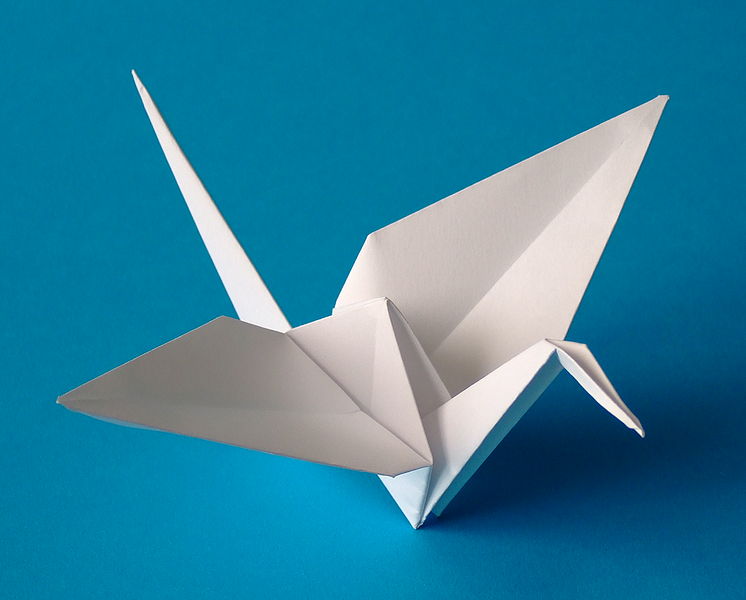
1.  Practice your origami skills--Rejection doesn't seem so devastating when it presents itself to you in the form of  an intricately folded majestic swan, faux rose, or cuddly kitten.  Line the shelves in your office and computer desk with those pulp-laden figurines.  Their adorable presence will definitely help take the edge off the blow you've just been dealt (unless you find your office being overrun with them; then they may start to become freakishly disconcerting--kind of like the Children of the Corn).


2.  Frame it--Congratulations! You are now a member of an exclusive club of writers which includes the likes of  Stephen King, William Golding, George Orwell, Ayn Rand, John Grisham, Sylvia Plath, Rudyard Kipling, Madeleine L'Engle, and Judy Blume, to name a few.  Everyone has faced rejection at some point in time in their lives.  The thing that separates the rejected successful from the successful rejects is a willingness to brush aside said rejection and soldier on.  Look at your rejection slip as proof of your accomplishment.  By merely finishing your novel, you've set out and accomplished what many people only talk about doing.  Be proud of your rejection; consider it your validation as an aspiring author.

3.  A good chuckle--Look at it this way, every 'no' is one step closer to a 'yes'. When you finally find yourself bestowed with the affirmative, dust off your old rejection letters and, with a bottle of wine (because really, what fun is just a mere glass), sit down and have a good laugh.  "Oh really, Agent J.  My manuscript wasn't good enough for you? Well,  Agent B seems to think it was the bee's knees," (breaking into popular sayings from the 1920's is completely appropriate for this moment).  Did one of your selected agents not like the characters, the plot, or your writing in general?  Take their critiques and relish in the fact that your dream agent thought them to be completely erroneous.

4.  Use them as motivation--When I was a little girl, I didn't take no for an answer.  In fact, every 'no' I received only motivated me more to attain what I wanted. As an adult, nothing in that respect has changed for me.  Call it being beautifully tenacious or just painfully stubborn, but when I find myself faced with  defeat, I immediately take it as a challenge.  Whether that challenge requires me to revamp my query letter, retool my synopsis, or completely overhaul my entire manuscript, I tackle it head-on.  When you're kicked down to the ground, take a moment to regain perspective, then stand up and hit the pavement running. Take that one 'no' to motivate you into fixing what may be wrong and completely wow the next agent you come across.

5.  Make a new playground for Mr. Snuffles--The time has come to clean out your beloved rodent's cage (or bird, whatever your pet of choice is)  and you discover you're all out of bedding.  Why book it to your local pet supply store when all the supplies you need are within walking distance?  That's right; tear all those negativity-laced correspondences up into tiny pieces and watch as your little fur ball frolics in all their subjectivity.

6.  Confetti--What's a party to celebrate your much-deserved publishing deal without confetti?  And what's more perfect for confetti fodder than your stockpile of rejection letters?  Just think of it as poetic justice in action as you watch hundreds of 'nos'  shredded-up into thousands of pieces for use in showering you as you celebrate your sweet, sweet success and the one 'yes' it took to get you there.

7.  Summer Bonfires--Nothing's better than sitting around a bonfire in your backyard on a cool summer night, letting its warmth envelope you as you lounge under the stars.  But, what's this?  You can't get the kindling to ignite?  Don't wander around the yard aimlessly in the dark when the solution is resting right under your nose; sitting next to those ravenously torn-open envelopes on your coffee table; in tear-streaked file folders on your desk; or crumpled up in balls next to the john (don't judge).  Yes, that's right. Rejection letters:  they turn more than just your dreams into piles of ash.

8.  Compare/critique form letters--Take a handful of those carefully crafted gems and put on your crit cap.  Which ones are the most helpful; the ones that aren't just mere form letters; the ones that aren't photocopied replications; the ones whose author seemed to actually care about your query?  Now, deduct points for phrases such "not right for us", "I didn't fall in love with it", "good luck" and words such as "subjective", "although", "consideration"  and "pass". Give them points for the inclusion of phrases such as "the worst thing I've ever read", "is this some kind of joke", "don't give up your day job", "you suck", "WTF is this" and words such as "hate", "why", "really", "huh" and "craptastic" (after all, honesty is the best policy).  Then tally up the scores and see who the big winner is.

9.  Practice your skills on the court--I'm not sure if it's laziness or just some deep-seeded attempt on my part to reclaim my childhood, but there's just something about an empty wastebasket and a piece of paper that brings out the Michael Jordan in me. When you find yourself running out of projectiles to hurl across the room, just ball up your disappointment (that alone should give you some sense of satisfaction) and commence dunking, free-throwing and lay-upping your heart out.


10.  Let the kiddies turn them into works of art--No matter how indiscernible their "owls" may be, children's artwork has a way of brightening even the most sour of moods.  With that logic in mind, let little Jane have at your latest literary losses.  Allow her to fingerpaint, marker and crayon the holy heck out of those letters of discontent like some deranged Martha Stewart. Just think of it as killing two birds with one stone.  You'll get to spend some quality time with your children and also gain the satisfaction of turning something ugly into a work of refrigerator-worthy art.

11. A replacement for Charmin--We've all had those moments where the roll has run empty at the most inopportune of times...okay, okay, maybe this one is going slightly overboard a little.  But don't tell me it's never crossed your mind a time or twenty.

Included below is a link to a website dedicated to actual rejection letters received by now famous authors whose novels went on to become classics:

http://www.writersservices.com/mag/m_rejection.htm

I love reading these as they are a perfect example of just how subjective the literary world really is and how writers need to take rejection with a grain of salt.

Now I'd like to hear from you.  What do you do with your rejection letters?  Do you keep them or cast them aside like a bad memory?

Monday, April 25, 2011

Rejection: It's Not You, It's Me.

“I take rejection as someone blowing a bugle in my ear to wake me up and get going, rather than retreat.”--Sylvester Stallone
"I wrote for twelve years and collected 250 rejection slips before getting any fiction published, so I guess outside reinforcement isn't all that important to me." 
                                                                      --Author: Lisa Alther
As any author or aspiring author can vouch for, rejection comes with the territory.  Nevertheless, unless you've somehow managed to develop skin of cast iron (which you should), even knowledge of the inevitable is not enough to soothe the sting.  All my life, I did my best to avoid rejection.  I never asked out guys I had crushes on; I never tried out for sports teams that I didn't know I would make; I never took any kind of risk.  I was content to remain in my own little protective bubble.  However, as I grew older--to the ripe old age of 27--I realized that perhaps what I perceived as contentment was really just complacency.  My life was/is great, but I was denying myself of a passion that I've had since childhood: writing.  Why?  Because I didn't think I was good enough for it to take me anywhere.  Maybe I am, maybe I'm not.  The point is, one shouldn't just cast their dreams aside due to their fear of the unknown.  This brings me to my blog topic for today:  Rejection.

Over the last year (I know, I know, I'm a newb), I've learned to deal with the consequences of chasing my dreams through the harsh waters of query rejections and the brutal blow of a rejection to a full manuscript.  I haven't sent out that many queries and I'm really debating between querying and epublishing (that's a blog for another day).  But, from the rejections to the queries I've sent out, I've both received and have come up with some DOs and DONT'S on how to handle it.

Do

1.  Don't take it personal-It's easy to think to yourself:  Why don't they like me?  What's wrong with my writing?  Maybe I'm not cut out for this after all. With that negative thinking inevitably comes a sense of deep depression.  The reality is that agents sift through thousands of query letters, and several partial manuscrips and full manscripts each month (and I'm pretty sure I'm being conservative here).  Of those query letters, there may be a handful (or more if the agent is new and actively trying to build their client list) that garner a request for the actual manuscript.  Of those manuscripts requested, there may only be one or two, if any at all, that are offered representation.  The fact is, agents are looking for writing that moves them, writing that is marketable.  Suprisingly, some times the two don't coincide.  I have a friend whose manuscript was rejected because it lacked paranormal elements.  The literary world is a subjective one.  What one agent thinks is a gem, another may think is just a pile of rocks.  Whatever the case may be, it's not a personal attack on you as a writer and shouldn't be perceived that way.

2.  Have a good cry then move on-Scream into a pillow, shed a few tears, put a few more shots of whiskey in your coffee, and grumble a few choice expletives--under your breath if, like me, you were at work when you received the craptastic news.  Do all of that then LET IT GO AND MOVE ON.  Each rejection is a stepping stone to publication.

3.  Rejoice-Whether it be Dr. Seuss, Louisa May Alcott, Agatha Christie, John Grisham, Judy Blume, Stephen King, and J.K. Rowling, all authors have faced the cold slap of rejection.  Just consider it your personal acceptance letter into an exclusive literary club and become a proud member.

4.  Get back on that horse-Don't take one, two, or even twenty "no's" as accurate indicators of your abilities.  Believe in yourself, continue to write and refine your skill.  Don't let your dreams gallop away from you.

5.  Revise-Assuming your query letter was sent to the right agent (one that represents your genre and isn't closed to submissions), a rejection based on a query letter alone is usually a sign that you need to revise.  The first query letter I ever sent out was nearly three pages long--for those of you who are familiar with the process, I'll give you a second to recover from the shock of that last statement.  I won't dwell on what makes for a decent query letter as I've already covered that in earlier posts.  My point is that unless you know the query letter you sent out is 100% perfect, you may want to consider going back to the drawing board especially if you're at a point where you've received five rejections from the same letter.  A rejection on a manuscript, however, is a completely different animal especially if no real reason is given for the rejection.  Perhaps, additional editing is needed; maybe it's not something they feel they can market; maybe they just didn't fall in love with it (gah, I hate that one).  Whatever the reason is, it never hurts to take a second look at your manuscript.  After all, you already expended copious amounts of time to write and refine it, what's a couple of more weeks going to hurt to ensure it's polished?

6.  Confer with your writing group-I'm not in a writing group, but I hear they're fabulous.  Writing groups are filled with individuals in your same boat; individuals who can and will dispense valuable advice.  Listen to their advice and apply it to your query letter, synopsis and manuscript.  If anyone wants to see you succeed it's someone who's rowing the same boat you are.

7.  Vent-Talk to your friends, family, co-workers.  Give Rover and earful.  Don't keep your feelings bottled up, let them go.  It will make you feel a heck of a lot better and allow you to reclaim your focus.

8.  Save them-Most people want to ball up each and every rejection letter and discard them from their memory as though they never happened.  I, on the other hand, prefer to save mine in a nice, neat, ever-expanding manilla folder.  I save them to remember not to become too comfortable with my writing; I save them as learning tools; I save them to remind myself that taking a risk is always worth it even if it doesn't pan out in the end.  Finally, I save them as I hope to be able to look at them one day--ten, twenty years down the road--when I'm published and need a reminder about where I've come from.

Don't

1. Go all Cujo on the agent-You're upset; it's understandable.  However, that doesn't give you automatic liberty to attack the agent or her knowledge of the business.  A few months back, I queried an agent; a new one who was actively seeking to build her client list.  Ultmately, she rejected my query letter which stung but not as bad as it had in the past.  I was upset for about five minutes, but then became positively infuriated when I saw--a blog, a tweet, I can't remember--by said agent roughly complaining about the amount of queries she was receiving and wishing that she had an electronic red "rejected" stamp so that she could just get rid of them all.  Ummmm...ouch.  Glad to know all that hard work and resarch I put in was worth it when I queried her. Anyway, writers need to understand that agenting is a buiness and they can and will run it any way they desire.  As an author, you need to resist the urge to send that scathing email or (gasp) phone call.  Thank the agent for taking the time to review your manuscript (I don't think too many people do this with queries) and move on to the next.

2.  Blame yourself-As I stated above, this business is subjective and, unless your writing is a rough, unedited first draft, most of the time it's nothing you did.

3.  Give up-This is your dream; your risk.  Don't abandon it.  Dig deep into your consciousness and re-discover your reason for writing.  You'll be amazed by how recharged you'll feel.

Some ways to increase your success with agents (I'm still in the process of perfecting these):

1.  Research-Know the agent you're querying.  Become familiar with what genre they represent, what authors they've represented, what their particular tastes are, etc.  For instance my unpublished manuscript features a strong, female protagonist.  While doing reasearch, I found an agent repping my genre who was looking for works featuring a strong female protagonist.  You can bet your ass I sent a query to her mentioning that specific statement. Invest in a subscription to Writer's Digest or borrow reference sources such as the Jeff Herman's Guide to Book Publishers, Editors, and Literary Agents, Guide to Literary Agents or Writer's Market.  Those are excellent resources that will assist in pointing you in the right direction.

2.  Put work into your query-The agents you selected aren't going anywhere.  Don't rush through a query letter as though they're going to turn into a pumpkin at midnight. Put the same amount of thought and work into your query as you did your manuscript .  You may have a killer manuscript but if your query sucks, that probably won't matter.

3.  Don't come across as too pretentious-It's great to have confidence in your writing, but if you try to sell your novel as the next big thing, you're more than likely driving the final nail into your coffin.
I hope you all had a Happy Easter.  As always, I would love your thoughts on anything in this post--whether you think I'm right or out in left field.  Don't worry, I don't bite.

Source for great quotes:  http://thinkexist.com/quotations/rejection/

Friday, April 22, 2011

Writer vs. Punctuation: An Epic Battle

Remember the olden days?  The days when you were in school and your teacher, professor, instructor, nun, sensei, or even Murray The Janitor were pleased as punch with your proper usage of commas.  Commas; back then they were our one big hurdle to overcome in book reports, exams and Language Arts assignments.  As fledgling writers, we used to believe that when we conquered the almighty comma we would, in essence, conquer the entire Kingdom of the Literary Word.  With the fall of the comma, we'd won the war and there was nothing separating us now from our dreams of literary domination.  But, wait...what's this?  A new onslaught to interrupt (pun intended) our quest?  Suddenly, we find ourselves surrounded by a mass of whole new problems: colons, semicolons and em-dashes.  They're unrelenting and they'e putting up one hell of a fight.


Colons, semicolons and em-dashes are lovely little mindfucks whose seemingly soul purpose is to royally confuse those of us who've stay up well past our bedtimes in order to indulge our ideas of new plot twists, dialogues or to capitalize on a relief from writer's block.  As much as we writers would like to dismiss these curvaceous dots and scintillating dashes, they do in fact serve a purpose and a function.  Undoubtedly, understanding these purposes and functions will take your writing to a whole new level.


Semicolons


Out of the three killjoys, semicolons are probably the easiest one to defeat.  Semicolons; are they a colon or an overexuberant comma?  I don't think they even know. 


Use a semicolon as follows:

  • To separate two independent clauses.  A semicolon is used when you want your audience to briefly pause and then read an entirely different independent  but related clause. Just think of a semicolon as a conjunction's evil twin.
          Example:  I really liked Johnny; his lack of personal hygiene unfortunately made him difficult to be around.
         
          If a conjunction would have been used:  I really liked Johnny but his lack of personal hygiene unfortunately made him difficult to be around.

          Do not use semicolons to link two completely unrelated ideas:  Calling me "ma'am" makes me homicidal; I want pancakes.

  • Use a semicolon to separate items in a list that utilize other forms of punctuation.
     Example:   Jersey Shore features Pauly somethingorother, a guy with weird hair; Snooki, an "actress" who also wrote a "book"; Ronnie, some other dude of lesser significance; and Mike, a complete moron. <---The fact that I know their names should disqualify me from existence on this planet.


Em-dashes


The second horsemen of the Apocolypse are em-dashes--punctuation that features two hyphens for the price of one.

Em-dashes are:
  • Used to interrupt, but not offset a phrase.
       Example:  Jersey Shore is featured in several different languages on MTV--nobody cared.
  • Two em-dashes, one on each side of a phrase, are used essentially in the place of a parentheses for information that you want to include but is completely unnecessary.
      Example:  To the dismay of everyone, this blog will now be featured in several different languages--Japanese, Valleygirlese, Pig Latin, and Spam--from this point forward.

Colons

Colons are the most brutal warrior of them all and never cease to foil me. 
  • Use a colon to introduce a list of items
      Example:  You need to possess three traits to read my blog:  a sense of sarcasm, a love of writing, and a bologna sandwich.

  • Use a colon to introduce a definition
      Example:  Jersey Shore (n):  The first sign of the end times.

Now that you have the information necessary to defeat these evil bastards, get to writing. 

References:  http://web2.uvcs.uvic.ca/elc/StudyZone/410/grammar/colons.htm 

and

http://blogs.officezealot.com/spiller/archive/2004/05/26/486.aspx

Thursday, April 21, 2011

My Top Ten Writing Pet Peeves

This is one of those blog posts where I offer nothing all that informative other than insight into what makes me tick.  In particular, this blog is devoted to what I consider to be the cardinal sins of writing.  Okay, so they aren't that bad--more pet peeves of mine.  As writers, we all have--at least I hope--our own styles of writing.  With those styles come opinions and perceptions of what is right, wrong and just plain annoying.  My list of the just plain annoying--keeping with my whole sin theme--is presented below:

1.  Thou Shall Not Write A Paperweight-I LOVE vivid descriptions...when they're warranted that is.  Some authors, however, like to riddle their works with as much unnecessary detail as possible resulting in a book with the capacity to kill someone if it were to fall off a shelf.  If I owned Atlas Shrugged and The Fountainhead in hardcover, for example, I'd make for darn sure they were on the bottommost shelf. Detail is great; detail is the icing on an otherwise satisfactory baked good.  Nevertheless, too much of a good thing will eventually make you sick.

2.  Thou Shall Not Begin A Sentence With The Word "And"-Let me make this clear, there is nothing grammatically wrong with beginning a sentence that way--unless of course you happened to have been one of my Language Arts teachers.  In Water For Elephants, many sentences begin this way garnering a reponse from me akin to someone running their nails down a chalkboard.  Even though I have reluctantly allowed myself to commit this act, it's just unnatural to me--which I guess is the very definition of "pet peeve".

3.  Thou Shall Refrain From Naming Thy Characters Either "Edward" or "Jacob"-I don't think I have to mention what book series includes these two names.  Unfortunately, they're also the names of two characters in Water For Elephants (which makes the fact that Rob Pattinson is playing "Jacob" that much more amusing).  There are other old school names besides "Edward".  For example, Harry, Peter, Rufus, Delbert...okay, I can see why Edward would be the  first choice.

4.  Thou Shall Focus On BOTH Plot AND Character Development For One Is NOT Better Than The Other:  I've read a few novels where there were incredible characters with a very narrow plot for them to traverse through (and vice versa, although not as often).  This is your novel, your attention to detail and perfection should shine throughout ALL aspects.

5.  Thou Shall Not Recycle The Same Story Over And Over Again-I've addressed this in my other blogs if you want a true rant on this little gem read my post on query letters.  As an aspiring author, I understand that pleasing your readers is immensely important, but if you've developed a devoted enough following, I think they'll understand if you mix things up a bit.  Instead of just a romance, perhaps include a smattering of mystery or suspense, for example.  I've read works by authors where it seemed like all they did was change the character's names and setting, but left the rest like everything else they've ever written.  Too often, I believe authors become so wrapped up in what has made them successful that they feel they've grown all they can.  This leads me to my next peeve;

6.  Thou Shall Travel Out Of Thy Comfort Zone-I'm the perfect example of this.  Not too many women dabble in science fiction (high five to my sisters who do).  In fact, if you would have told me five years ago that I would actually write a science fiction novel, I would have thought you crazy. When I first began writing, I toyed with romance, YA and works of a dramatic nature (just short stories, nothing big).  It was only after my novel refused to leave the crevices of my cranium that I finally decided that I would write it down just to eliminate the headache.  Sure, it was uncomfortable and required some research on my part, but not only did I get a novel out of it, I now have a series in the works.  If I would have stayed with romance, I may still be stock on a plot line.

7.  Thou Shall Not Question Thy Reader's Intelligence:  If your readers are surprised to learn that a school bus is a brilliant shade of maize encompassing a bulky metallic structure built for the transport of small humans, chances are they won't have the mental capacity to even pick up a book let alone read it.  Don't be overly descriptive of trivial things, it's both unnecessary and unfortunate.  Your readers know how to brush their teeth, you don't need to provide them with step-by-step instructions in your novel.

8. Thou Shall Not Overuse Punctuation:  I've never purported to be the Queen of all Grammar.  Lord knows--during the revision stage--I've often questioned my own comma misusage.  Don't place commas, semicolons or em dashes willy-nilly as though you're decorating a Christmas tree.  Take time to learn how they're used.  I know, I know I need to take my own advice on this one.

9.  Thou Shall Try To Maintain Unpredictable Dialogue:  This is, unfortunately, something I also need to work on.  All too often, I come across dialogue--mainly a parent talking to a child--where I don't even need to read the page to know what's being said.  Conventional dialogue doesn't always translate into good parenting.  Surprise the reader, make your characters say something completely unexpected or new.

Finally, the biggest one of them all:

10. Thou Shall Deliver On One's Promises:  I recently read a book that promised an epic battle; the battle of the century, in fact.  Well, maybe it didn't literally promise that this was going to happen but the build-up throughout the first 500 or so pages was really making me anxious.  About ten pages away from the ending, I'm thinking to myself, is there another book in this series?  Sadly, there was no such book...and no such battle.  Had there been one perhaps that series could have been saved in my eyes.  Instead, I was just pissed.  FOR THE LOVE OF GOD stay away from being anticlimatic.  For those of you who fail to heed this suggestion, you better begin readying yourselves for your readers to rally around your home with pitchforks.

There you have it, my ten Pet Peeves.  Now it's your turn to leave some of your own.  For the purpose of my blog is for writers to come together to vent, advise, debate and confer over the one passion we all have in common.

My next post will stick to my usual, informative format and will address the proper usage of semicolons and em dashes as I too could use a refresher course.

Sunday, March 6, 2011

Encouraging Quote of the Day Authors

"Writing a novel is like driving a car at night. You can see only as far as your headlights, but you can make the whole trip that way."
                           --E.L. Doctorow